

Where Book Titles Come From
Pt. 8 Mary Shelley and Me: Facts and Rumours About Mary Shelley's Gothic Novel

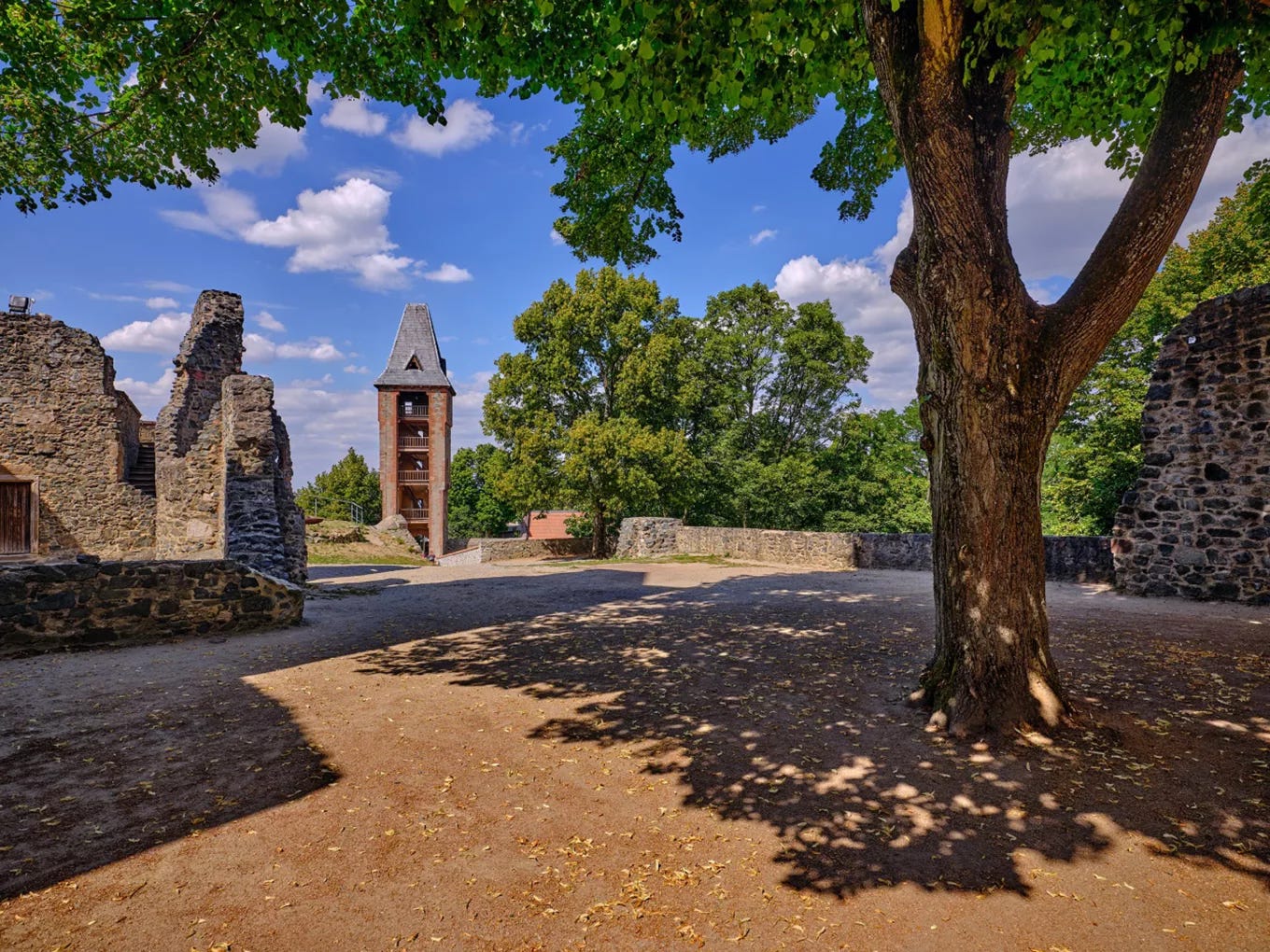
Understanding where book titles come from often reveals as much about the author’s creative process as the story itself. In 1814, when Mary (then) Godwin and Percy Bysshe Shelley went on their six-week tour in Europe, they “likely” passed ruins of Castle Frankenstein in Germany and the seed of one of literature’s most iconic titles was planted.
This is the eighth installment of Mary Shelley and Me, exploring where book titles come from using one of the most famous examples in Gothic literature.
The Factual Stuff About Where Book Titles Come From
There are a few castles with the name Frankenstein, but experts have led us to believe that a sighting by the writers in 1814 led Mary to choose the title. We know the castles and stories about them left an impression on our travelers from their general mentions in History of a Six Week’s Tour.
Experts agree that the sound alone of the word Frankenstein may have had the ideal Germanic Gothic feel for Mary. I like imagining young Mary (not even 17 yet) rolling the sound of it around in her mouth.
By the way, the word isn’t as complicated as we might wish. It literally means “Franks” of the “stone.” Frank was the name ancient peoples of the Rhine valley area were known by as far back as records exist. (The history of the Franks is a great one for geeks, BTW.)
There is no proof that Mary ever considered any other title for the book.
This is a perfect example of where book titles come from sometimes it’s a single moment, a place, a sound that just fits.
Enough about those experts. Let’s get into the rumors, shall we?!
Where Book Titles Come From: The Juicy Bits
The best-known and most likely Burg (castle) Frankenstein still exists and, of course, has become a tourist attraction. It is under renovation now (and if you’ve been, please send me pics and I’ll post them with credit).
Theologian and physician Johann Konrad Dippel lived at the castle (1673-1734), and he is infamous for his alchemical antics.
I choose to believe (and some published experts do too) that the story of Dippel’s experimenting with corpses at the castle reached the ears of Mary and Percy. Come on, two writers for sure heard about this on the road!
By the time Mary was traveling the Rhine, the name “Frankenstein” already carried an aura of dark experiment and forbidden knowledge, whether or not she consciously drew from those tales.
But seriously, what writer would forget hearing about this stuff? Am I right?
Understanding Where Famous Book Titles Come From
Dippel was Mary’s kind of radical. A lot like her parents in many ways, but writing a few decades earlier. Some of his writing about religion and philosophy was banned as heresy. But he wasn’t just a man of the Protestant church, he had training as a physician too.
“Folklore” says Dippel attempted to transfer souls from one body to another and reanimate the dead in his secret chambers in Castle Frankenstein. Stories about robbing graves were told and likely blossomed in the Romantic period, but there is some fact to it, which I think was interesting enough to catch Mary’s interest and be memorable.
The creation of a concoction called “Dippel’s Oil” from distilled animal parts is factual. This famous resident of Castle Frankenstein claimed it could be used medicinally and even for extending life.
How Gothic is that for you?
This perfectly illustrates where book titles come from for many writers, it’s the convergence of place, legend, sound, and story that creates the perfect name.
The Castle, The Name, The Legend
I don’t think it’s a stretch that Mary held bits of a story in her head, and when the egotistical, overly ambitious Victor Frankenstein commenced experiments, she had a name for him. (See my next post about who she had in mind as Victor’s model.)
It’s conceivable that Mary was reminded of the Castle and possibly the “real Dr. Frankenstein” again.
Mary and Percy Shelley (by then, married) traveled along the Rhine again in 1816–17. Scholars can debate whether and when she heard local legends of Dippel’s grisly experiments. There is no proof she did, but given the Romantic taste for such stories, it’s entirely plausible.
She studied and read Charles Darwin and Luigi Galvani, and she witnessed events by Giovanni Aldini where he used galvanism to try to reanimate frogs and humans.
What Writers Can Learn About Where Book Titles Come From
Gothic writing is steeped in exaggeration, and for me the convergence of name, place, and legend made the associations with the novel and our very clever Mary Wollstonecraft Godwin Shelley irresistible.
Where book titles come from is rarely a simple answer. For Mary Shelley, it was:
A castle she likely passed on a journey
A sound that felt perfectly Gothic
Local legends of forbidden experiments
Historical figures who pushed boundaries
Her own fascination with reanimation and science
The convergence of all these elements into one perfect word
The title wasn’t manufactured or workshopped. It emerged from lived experience, travel, Gothic sensibility, and the cultural moment she inhabited.
For True Frankenstein (the Novel) Fans: Geek Facts
I’ve always found it surprising that “Frankenstein” as a name is most often assigned to the Creature, rather than the man, by people who may only know it by movie posters. Here are a couple of other facts for you. (I love you geeks.)
Facts about the novel:
Victor was Swiss, not German
The Creature had no personal name - He is “monster,” “creature,” “daemon,” “devil,” “fiend,” “wretch,” and other epithets. I use Creature with a capital C.
Victor Frankenstein wasn’t likely a physician - We don’t know that he finished medical school. We know he was distracted by the dark arts immediately upon arrival in Ingolstadt
Mary Shelley led us to believe he got further distracted by his experiments and thieving of cadavers, then ran off when the Creature came to life
“Victory” was the first name of the character in the original drafts
Victor Frankenstein was really young - He left his parents’ home and went straight to school at about 17. So at best, he was about the age of Mary Shelley herself when he built the Creature (19 or 20)
Victor’s father wanted him to be a lawyer
Victor was too lazy to scale the Creature, so he built an 8-foot-tall man (Close to my heart because giants are the loves of my literary, medical, and personal life, as you know. Tag Loving Large)
The Perfect Title
Understanding where book titles come from helps us appreciate the artistry behind naming our work. Mary Shelley didn’t overthink it. She didn’t test-market it. She didn’t workshop twenty alternatives.
She heard a name that carried the weight of Gothic legend, alchemical experiments, and forbidden knowledge and she knew it was perfect for her ambitious young scientist who played God.
Sometimes that’s exactly where book titles come from: a moment of recognition when sound, meaning, and story align.
In the next Mary and Me posts, I’m writing about the second half of Frankenstein’s title, “The Modern Prometheus,” and some of the men in Mary’s life she may have modeled Victor Frankenstein after.
Want more Behind the Book content about Frankenstein and other literary classics? Subscribe for free.
Subscribe for more literary deep dives, behind-the-book explorations, and geeky facts for book lovers.
Related Reading:
more cool details about Mary Shelley in “Gothic Love and the Things We Choose To Keep”
Other Behind the Book posts that you might enjoy: William Golding’s Lord of the Flies
Subscribe for more free content.
This was a delicious coffee break read. I don't want to leave fascinating Facts & Rumoursville and go back to cubicle land. But, alas. Thank you for the scoop.
Fascinating info!